Radiation-tolerant UPS · Data centers in orbit
Power that holds through every eclipse.
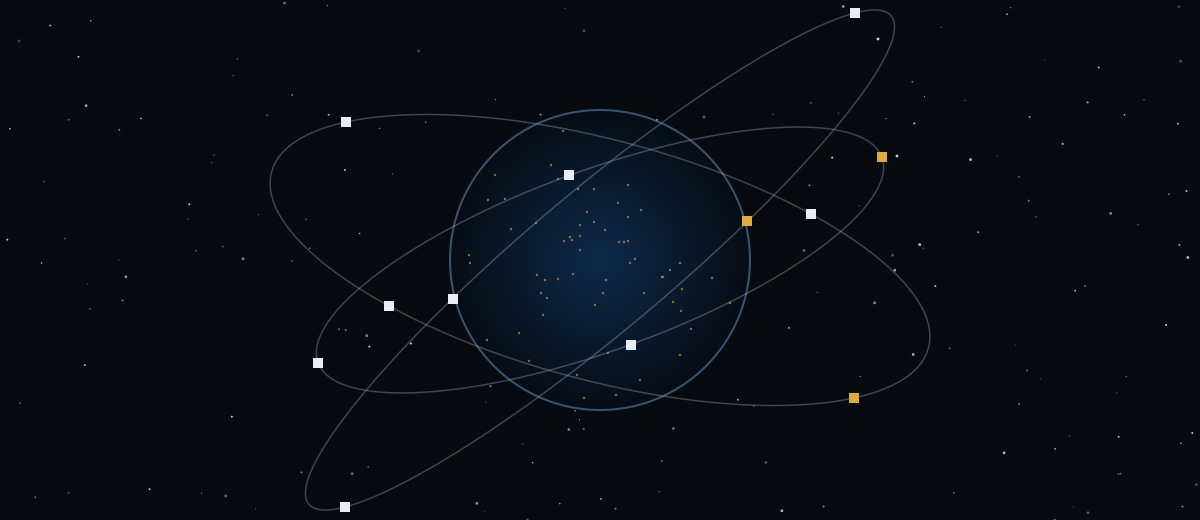
Orbijoule designs and builds uninterruptible power supplies for compute in orbit. Our units keep GPU and TPU clusters running through eclipses, millisecond load spikes and radiation upsets. Each product is qualified once and flies on any major launcher.
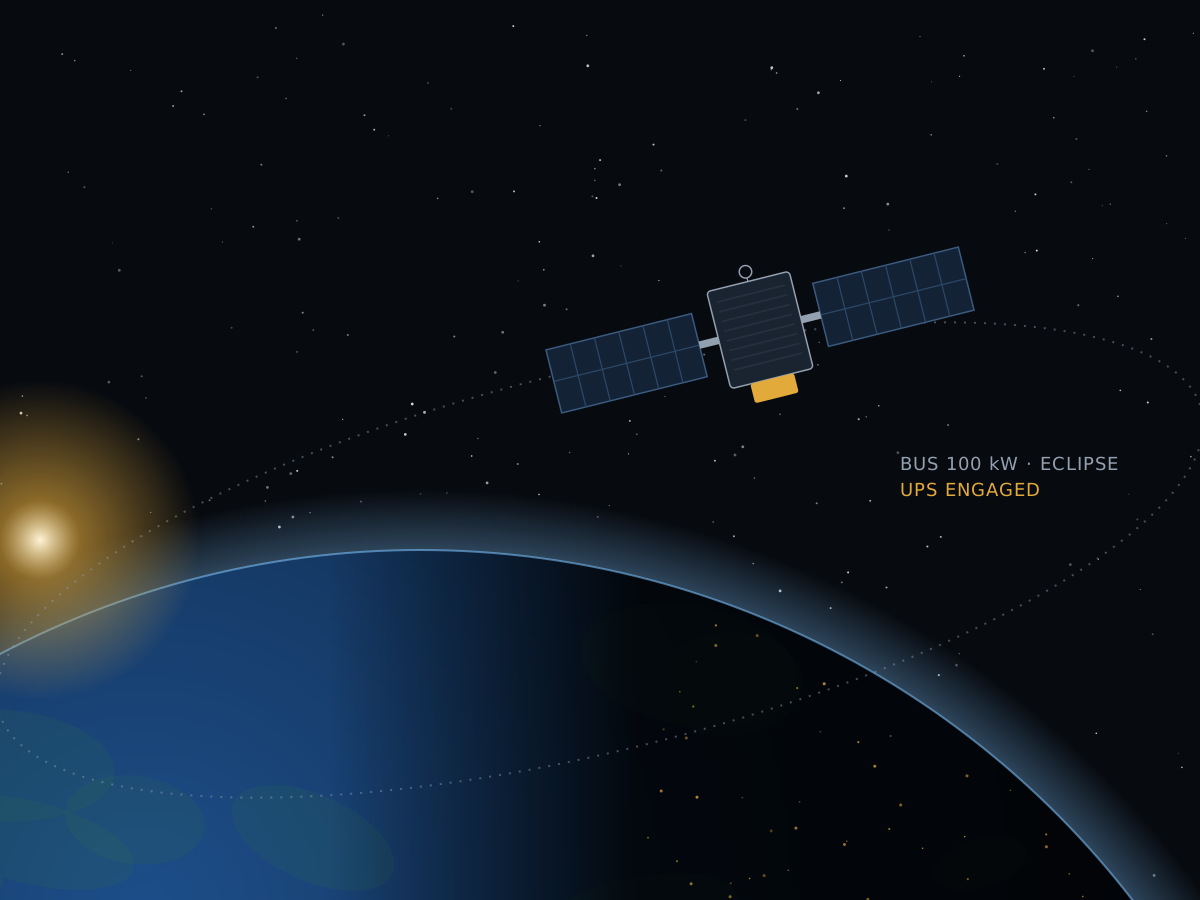
LEO · up to ~36 min of shadow per 95 min orbit · bus stays up · BMS triple-redundant · ITAR-free
USD 28.16 B
Forecast space-based data center market in 2040, up from USD 0.11 B in 2026 (MarketsandMarkets)
≤ 100 kW
The system size expected to lead early orbital deployments, and the range our OJ-Core covers
2029
Rideshare flight demonstration, ahead of first constellation deliveries in 2030
The problem
Satellite power was never built for always-on compute.
Orbital data centers are moving from demos to constellations. A GPU cluster that browns out loses its workload, and three things in orbit keep trying to make that happen.
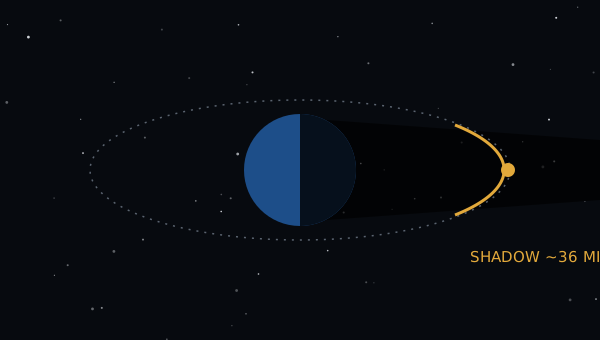
Eclipse
The sun goes away
Most low-Earth orbits spend a large share of every orbit in Earth’s shadow. Even dawn-dusk orbits see seasonal eclipses. Compute must ride through each one without dropping load.
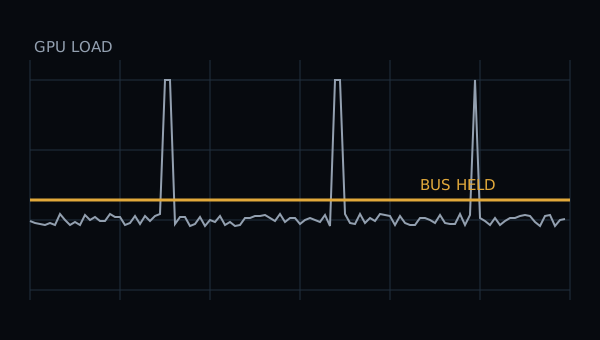
Transients
Loads jump in milliseconds
AI accelerators swing their power draw as workloads start and stop. Satellite power buses are tuned for slow, predictable loads.
Radiation
Particles flip switches
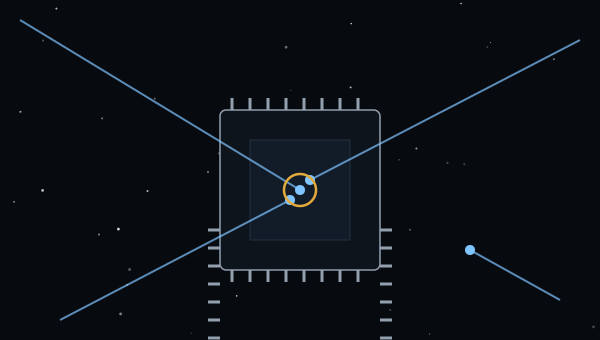
Total dose wears down power semiconductors, and single-event effects can trip a converter or battery controller in an instant. With commercial chips in the compute layer, the power layer has to be the hardened one.
The product
A data-center UPS, rebuilt for radiation.
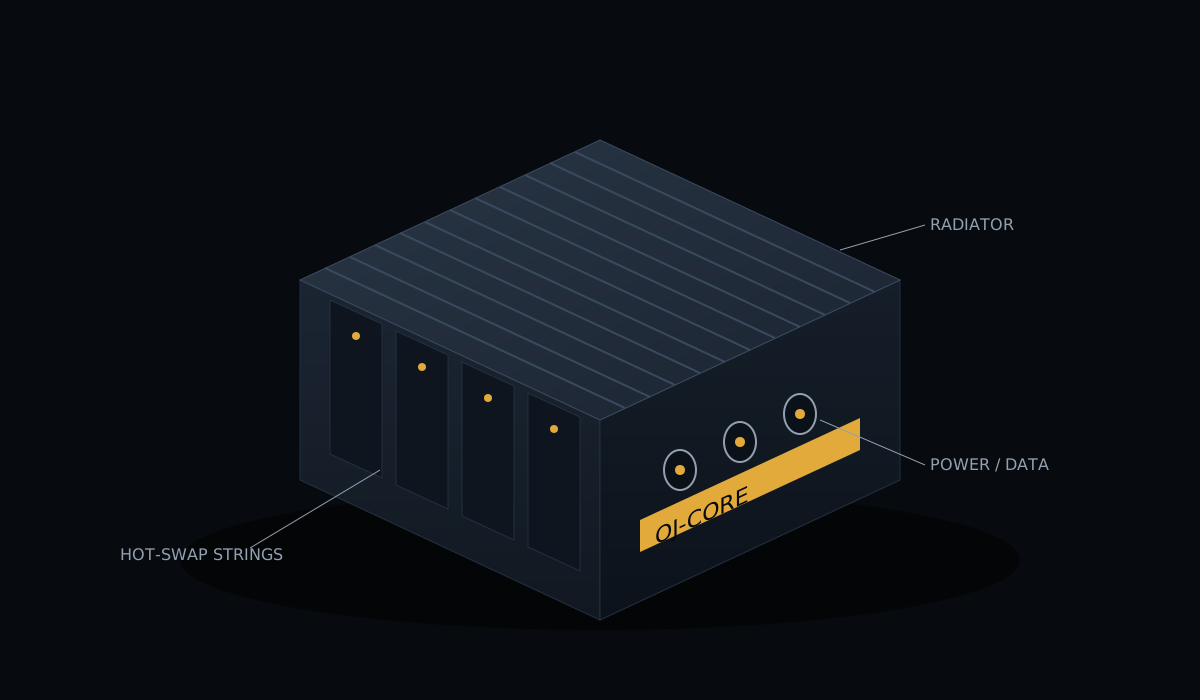
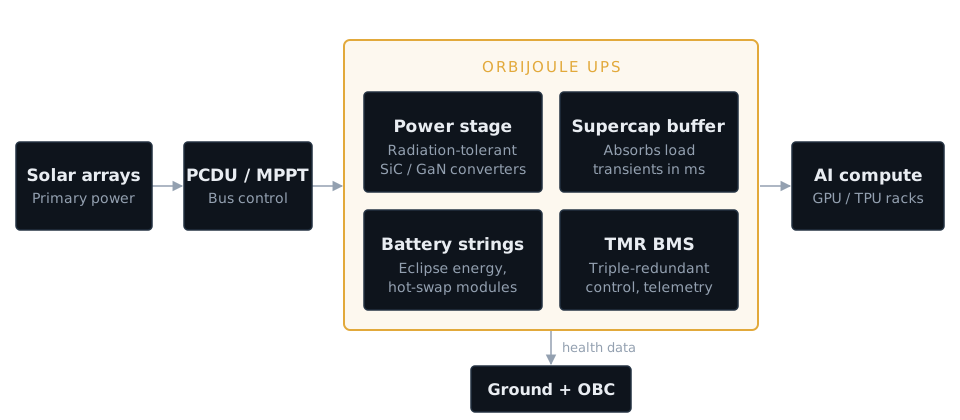
The Orbijoule UPS sits between the spacecraft power bus and the compute payload. The supercapacitor buffer absorbs millisecond spikes, the battery strings carry the load through eclipses, and a triple-redundant battery management system keeps control alive through single-event upsets.
Product line
| Product | Role | Energy | Power | Available |
|---|---|---|---|---|
| OJ-Pulse | Supercapacitor ride-through for load transients | Seconds of buffer | Up to 20 kW peak | 2029 |
| OJ-Core | Eclipse UPS for a single compute satellite | 2–10 kWh | 5–25 kW | 2029 |
| OJ-Grid | Stackable system for large orbital clusters | 50 kWh+ | 100 kW+ | 2031 |
Radiation-tolerant by design
Hardened or screened power semiconductors, latch-up protection, derating and triple modular redundancy in the control logic.
Degrades gracefully
Independent battery strings and converter phases, so a single failure reduces capacity instead of cutting power.
Behaves like a data-center UPS
Ride-through, load sharing, prioritized shedding, hot-swappable modules and fleet telemetry your operations team already understands.
Launch strategy
Qualified once. Flies on any rocket.
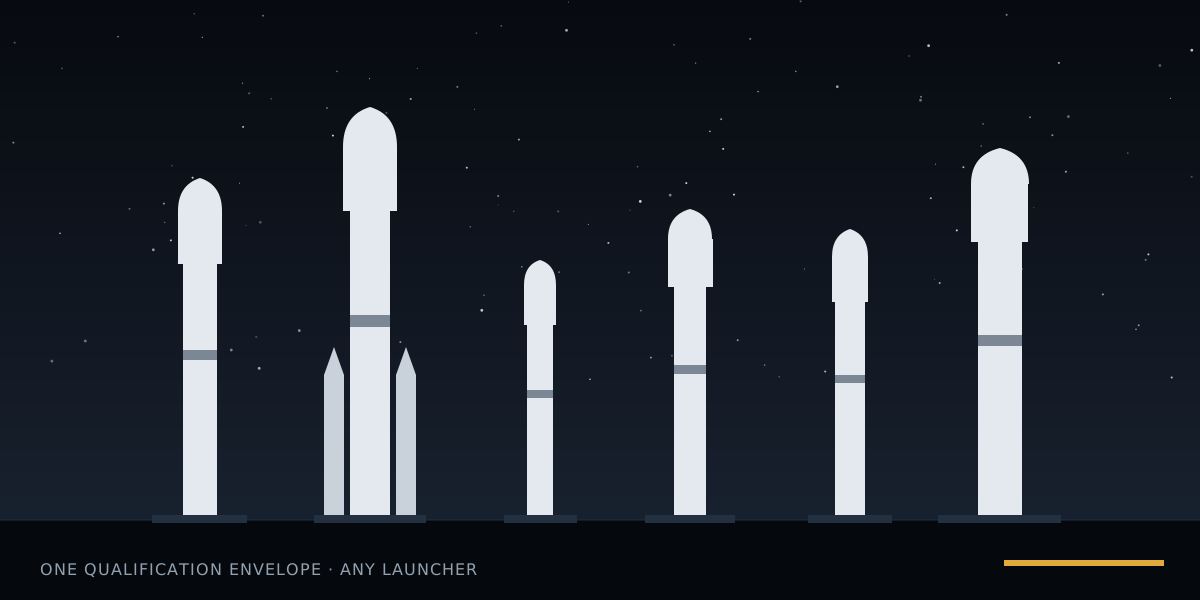
Every Orbijoule product is tested to one enveloping environment that covers the vibration, shock, acoustic and thermal limits of all major launchers. Customers fly our UPS on whichever rocket carries their satellite, with no mission-specific requalification.
| Launcher | Status | Role for Orbijoule |
|---|---|---|
| SpaceX Falcon 9 Transporter | Operational | Flight demo and most customer missions |
| SpaceX Falcon 9 Cake Topper | Operational | Larger compute satellites, up to 2,500 kg |
| Ariane 6 | Operational since 2024 | European institutional and ESA missions |
| Vega C | Back in service since 2025 | European rideshare alternative |
| Isar Aerospace Spectrum | First successful flight, Sep 2026 | Dedicated European small launch |
| Rocket Lab Electron | Operational | Time-critical, orbit-specific missions |
| Rocket Lab Neutron | First launch expected 2027 | Constellation deployment from 2028 |
| RFA One · ISRO PSLV | Maiden flight planned · Operational | Additional European and rideshare capacity |
- Standard interfaces for common satellite buses and rideshare dispensers.
- Battery launch safety tested to UN 38.3 and launcher safety requirements.
- Two launch paths per mission, pairing a US rideshare with a European option.
Why Orbijoule
Swiss-built, ITAR-free, focused on one job.
Category focus
The only UPS designed around data-center loads in a radiation environment. Space battery suppliers build for satellite buses; terrestrial UPS makers have no flight qualification.
Faster integration
A qualified, launcher-agnostic unit replaces months of in-house power design, so your team stays on compute.
European sovereignty
Designed and built in Switzerland, a founding member of ESA, with ETH Zurich, EPFL and the Paul Scherrer Institute’s radiation facilities close by.
Telemetry as a service
Fleet health data and degradation forecasts help operators plan battery life and end-of-life across a constellation.
Contact
Building compute for orbit? Let’s talk power.
We are working with early operators and satellite primes to define the first flight units. Write to us for specifications, partnership or investment.